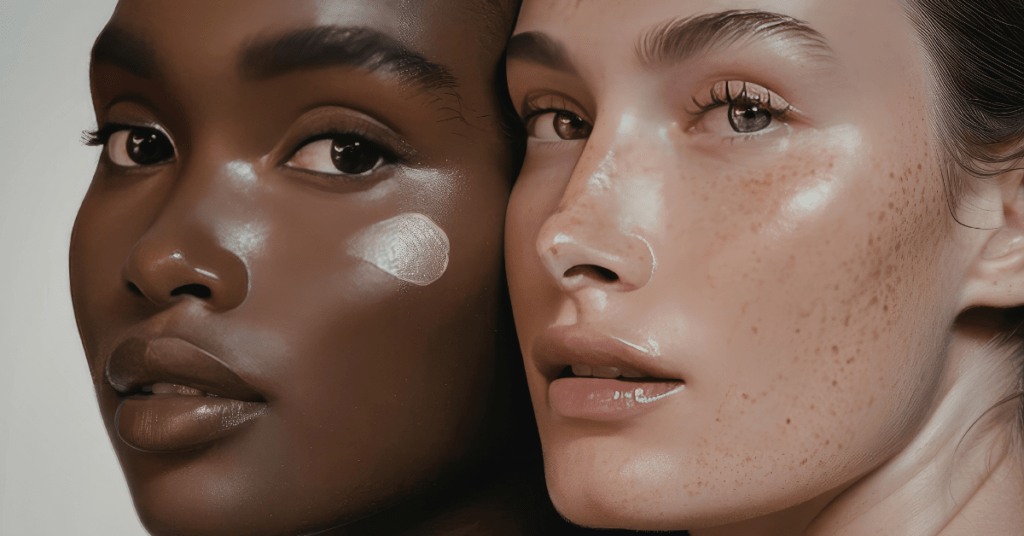
A skin tint promises fresh, natural-looking coverage, while foundation offers more control over redness, dark spots, and uneven texture. So, which is better: skin tint or face foundation? The answer depends on your skin type, coverage needs, finish, climate, occasion, and how much time you want to spend applying makeup. This guide compares coverage, wear time, ingredients, application, and daily use, so you can choose the base that fits your routine.
Skin Tint and Foundation Create Different Coverage and Finish Results
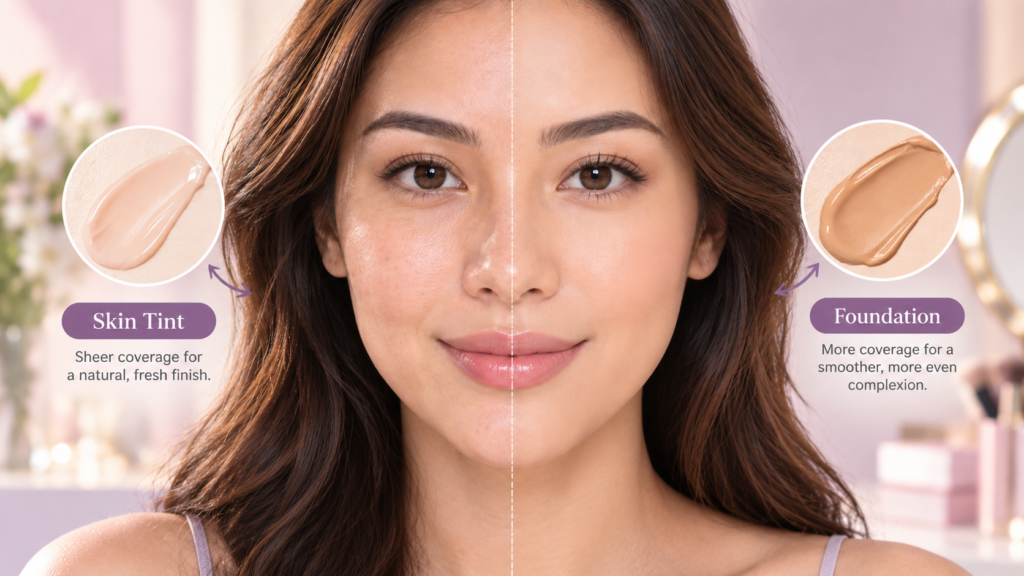
The product label can point you in the right direction, but performance matters more than marketing. A skin tint can be more pigmented than expected, while some foundations feel light and look sheer.
What a skin tint is designed to do
A skin tint is usually a lightweight complexion product made to even out mild discoloration while letting natural skin show through. Most offer sheer-to-light coverage, a thin texture, and a satin or dewy finish.
The result is often “your skin but more even.” Freckles, beauty marks, and natural textures usually remain visible. Still, formulas vary widely, so “skin tint” does not guarantee a certain coverage level, finish, or ingredient list.
What face foundation is designed to do
Foundation gives you a wider range of coverage, including light, medium, and full coverage. It can reduce the look of redness, acne marks, hyperpigmentation, and uneven tone across larger areas.
You can find foundations in liquid, cream, powder, stick, and serum formulas. Some feel almost weightless, while others provide a polished, high-coverage finish. A medium-coverage foundation can often be sheered out, then layered where you need more correction.
How coverage and finish change the final look
Coverage describes how much discoloration a product hides. Finish describes how the surface looks, such as dewy, satin, or matte. Texture describes how the product feels and spreads.
A dewy foundation may look lighter than a matte skin tint, so these categories should not be treated as opposites. Primer, tools, skincare, and layering also change the result. A tint usually gives a natural, low-makeup effect, while foundation gives a more perfect and adjustable complexion.
Your Skin Type Should Guide the Better Base Product Choice
Your skin behavior matters as much as the product category. The best base depends on its ingredients, how you prepare your skin, and how the formula wears after several hours.
Why skin tints may suit dry or combination skin
A hydrating tint can work well for dry or dehydrated skin when it contains ingredients that help the formula spread without feeling tight. Humectants attract water, emollients soften the skin, and silicones can create a smooth, flexible feel. Oil may help some people, but they can feel heavy or cause congestion for others.
Dewy makeup can highlight flakes if the skin underneath lacks moisture. Apply moisturizer first and let it settle before adding the tint. A satin finish may suit combination skin better than a very glossy formula, especially around the nose and forehead.
Why foundation may work better for oily or acne-prone skin
Foundation often offers more choices for oil control, longer wear, transfer resistance, and buildable coverage. Look for oil-free, matte, or long-wear formulas if shine is your main concern. The American Academy of Dermatology also suggests choosing makeup labeled “oil-free” or “non-comedogenic” for oily or acne-prone skin.
Those labels are helpful starting points, not a promise that every formula will suit you. Heavy layers, poor removal, shared tools, and irritating ingredients can cause problems with either a tint or foundation. The AAD recommends removing makeup before bed and cleaning brushes regularly, along with choosing products that do not clog pores. AAD makeup guidance for acne-prone skin supports these habits.
How sensitive skin changes the decision
Sensitive skin may react to either product type. Check the ingredient list for fragrance, essential oils, drying alcohol, preservatives, or any ingredient that has caused a past reaction.
The American Academy of Dermatology’s patch-testing guidance recommends applying a product to a small test spot twice daily for seven to 10 days. Stop using it if you develop red, itchy, or swollen skin. A fragrance-free formula can be a safer starting point, but personal tolerance matters most.
Coverage Needs Make the Skin Tint Versus Foundation Decision Easier
Start with the result you want, rather than the name printed on the bottle. Your main goal may be a quick, natural base, or clear correction for visible discoloration.
Choose a skin tint for a natural everyday complexion
A tint suits mild unevenness when you want skin to remain visible. It works well for quick workday makeup, errands, casual outings, and routines where you prefer a low-makeup appearance.
Apply the tint across your face, then use concealer only on blemishes, under-eye shadows, or areas of redness. This approach can look more natural than applying a high-coverage base everywhere.
Choose foundation when correction and customization matter
Foundation may be the better choice for strong redness, acne scarring, discoloration, formal events, or photography. It gives you more control over how much coverage sits on each part of your face.
Start with a thin layer and add more only where needed. A sheer or light foundation can still create a natural finish, while a fuller formula can cover more without requiring extra concealer.
Combine both products for flexible coverage
You can wear a tint across your face and add concealer to focused areas. Another option is foundation through the center of the face with a lighter tint around the perimeter.
Keep products separate when possible. Mixing formulas can change their texture, shade, separation, and wear time. Test the combination on your face before relying on it for a long day.
Wear Time, Climate, and Finish Determine Which Base Performs Better
A product label cannot predict exactly how it will wear. Formula, skin preparation, setting products, sweat, and humidity all affect the result.
How each product performs in heat and humidity
In hot weather, choose thin layers and formulas described as lightweight, sweat-resistant, or long-wearing. A tint may feel comfortable, but it can fade faster if it contains little pigment or has a very dewy finish. Some foundations last longer, though heavy layers may crease or separate as skin produces more oil.
Set only areas that need it, such as the forehead, nose, and chin. Blot oil instead of rubbing it away, then add a small amount of powder if needed.
How to choose between dewy, satin, and matte finishes
Dewy makeup can make the skin look fresh, but it may increase visible shine and emphasize texture in oily areas. Satin offers a balanced, skin-like appearance that suits many skin types. Matte makeup helps reduce shine but may draw attention to dry patches or fine lines.
Skincare preparation changes how every finish looks. Moisturize dry areas, allow sunscreen to settle, and avoid applying too much product around pores and lines.
Which option works best for long events and photography
Foundation often gives more control for weddings, professional events, performances, and photos. A tint can work well when the event is casual, or the desired look is very natural.
Test the exact shade, skincare routine, primer, and setting up products before an important day. Check the base in daylight and indoor lighting for oxidation, transfer, flashback, and separation.
Application Technique Can Make Either Product Look More Natural
A good formula can still look uneven when applied over wet skincare or in a thick layer. Give your products time to settle before judging the finish.
How to apply a skin tint for even, sheer coverage
Shake the bottle if the instructions call for it. Apply small amounts to the center of your face, then blend outward. Fingers can warm and spread a thin tint, a damp sponge can create a softer finish, and a brush can give you more control when layering.
Apply sunscreen first and wait until it feels set. Add another thin layer only where you want more coverage.
How to build foundation without a heavy finish
Begin with a small amount and press or stipple it onto areas that need correction. Excessive brushing can move the product and make texture look uneven. Use a damp sponge to soften edges after applying coverage with a brush.
Compatible skincare, the right primer, thin layers, and setting time can help prevent separation. Avoid piling several wet products onto the face before the previous layer has settled.
How to select the right shade and undertone
Test shades along the jawline and compare them with your neck in natural light. Cool undertones often look pink or red; warm undertones look golden; neutral undertones sit between them, and olive undertones can appear green or muted.
Let the product dry before deciding. Some formulas oxidize and become darker or warmer after several minutes. If your face and neck differ in tone, choose the shade that creates the most natural transition rather than matching only your cheek.
The Best Choice Depends on Your Routine, Priorities, and Budget
A tint may save time and feel comfortable, while foundation may reduce the need for several correction products. Your ideal base should fit how you live, not only how it looks in a store.
| Choose a skin tint when you want | Choose foundation when you want |
| Sheer, natural coverage | Medium-to-full coverage |
| Fast application | More shade and finish options |
| Lightweight wear | Longer wear for events |
| Visible freckles and skin texture | More correction for redness or marks |
| Easy pairing with spot concealer | A polished, customizable base |
Ask yourself whether you want sheer or buildable coverage. Consider your skin type, preferred finish, event length, climate, and the time you must apply makeup. Prioritize comfort and formula performance over the category name.
Final Verdict: Skin Tint Is Better for Light Coverage, Foundation Wins for Versatility
A skin tint is usually better for breathable, natural-looking everyday makeup. Foundation is usually better when you need correction, longer wear, or control over coverage and finish. Neither product wins for every person or every occasion.
Choose a skin tint when your goal is to enhance your natural skin. Choose foundations when you want to perfect or customize your complexion. When you need a middle ground, use a tint with concealer or combine light layers of both products.
Recommended Products for Your Makeup Base
Looking for a skin tint or foundation to try? Here are some options to consider based on coverage, finish, skin type, and everyday makeup needs.
Disclosure: As an Amazon Associate, I earn from qualifying purchases. We only recommend products that we believe offer value to our readers. Learn more.

- Tinted Hydrating Serum Vegan Foundation: Formulated with Hyaluronic Acid to leave skin smoother and more hydrated, plus …
- Hyaluronic Acid: Naturally found in the skin, Hyaluronic Acid helps enhance skin’s ability to retain moisture; Vegan mak…
- Illuminate Your Face: From BB creams to blush, we have all you need for a smooth, even finish; Highlight to illuminate y…
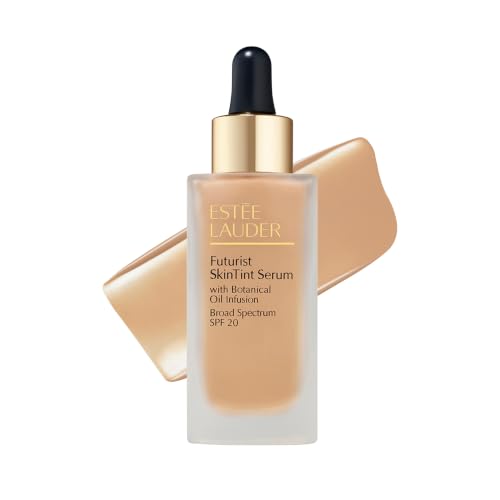
- INSTANT BENEFITS: Hydrates and conditions. Moisture and radiance are locked-in all day. Plus, 8-hour staying power: All-…
- MORE RESULTS OVER TIME: In just 1 week, skintone looks improved, and skin looks smoother. Skin’s own moisture is increas…
- 85% SKINCARING INGREDIENTS: Every precious drop is enriched with skin-essential nutrients, including our Botanical Oil I…

- LONG-WEARING: Oil-free, fragrance-free foundation creates a flawless look for up to 24 hours; comfortable and lightweigh…
- BUDGE-PROOF: Transfer-resistant & waterproof resists heat, sweat & humidity; SPF 15
- SKIN-CARING: Antioxidant Vitamin E helps nourish & protect skin from pollutants

- Science That Sees Your True Match – Formulated with 6 pigments for the most precise match. 99 percent of women found the…
- Makeup Foundation: Our liquid foundation formula locks in moisture and provides medium coverage with a natural finish th…
- The Same True Match You Love, Now Better: Now formulated without alcohol, oils and fragrance, our foundation will not cl…
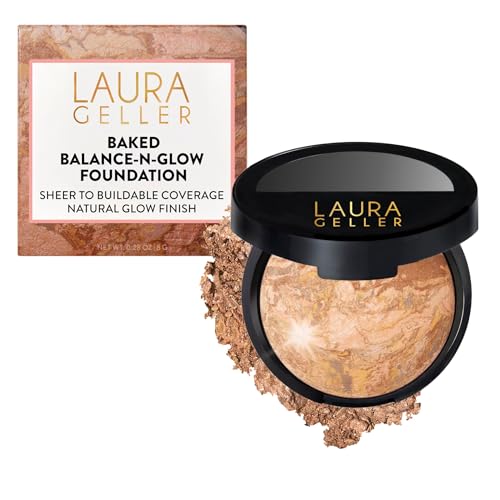
- MEDIUM: Laura’s shade! Get this award-winning powder foundation in the perfect shade for medium skin.
- PERFECT FOR: Perfect for even mature skin, uneven complexions, and those with fine lines and wrinkles. This stunning, aw…
Glow Journey Tip: You don’t always need full-face coverage. Start with a thin layer and add product only where you want more coverage. This can help maintain a more natural-looking complexion while giving you control over areas that need extra correction.
Frequently Asked Questions About Skin Tint vs Foundation
References
- American Academy of Dermatology (AAD) — Makeup and Acne
Learn more about choosing non-comedogenic makeup and habits that can help reduce acne-related problems.
AAD: 10 Skin Care Habits That Can Worsen Acne - American Academy of Dermatology (AAD) — How to Test Skin Care Products
Dermatologist guidance on testing new products on a small area of skin before using them more widely.
AAD: How to Test Skin Care Products - American Academy of Dermatology (AAD) — Skin Care for Acne-Prone Skin
Additional dermatologist-backed guidance for caring for acne-prone skin.
AAD: Skin Care for Acne-Prone Skin