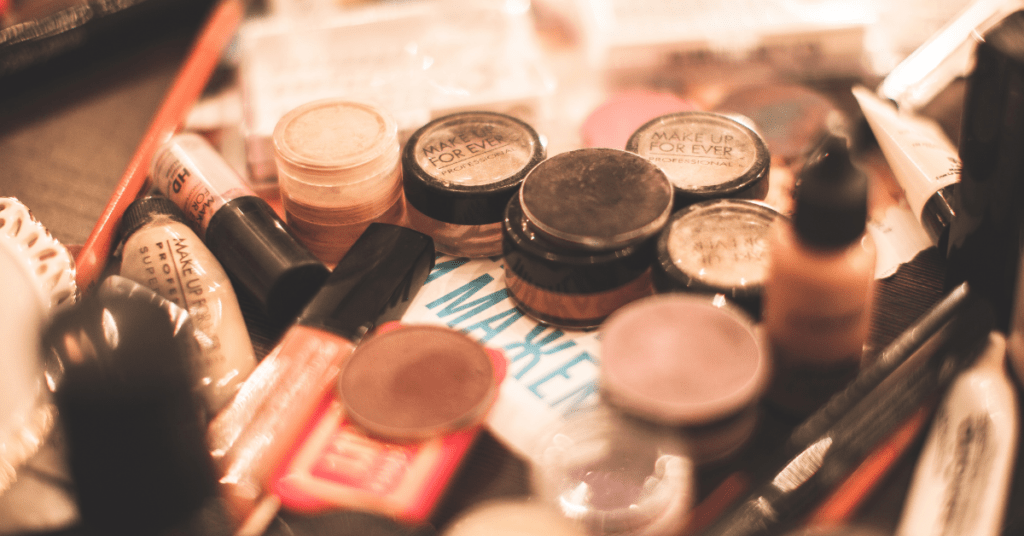
Your skin barrier acts as a shield against environmental stressors, keeping moisture in and irritants out. When you use the wrong facial cleanser, you might accidentally compromise this defense system. Many cleansers prioritize high foam and strong scent over actual skin health. These products often contain ingredients that strip away vital oils and disrupt the natural balance of your skin. Recognizing these damaging ingredients allows you to select products that keep your complexion calm, clear, and hydrated.
Decoding Harsh Surfactants: The Suds That Strip
Surfactants are the agents in cleansers responsible for removing dirt and oil. While they are necessary, some surfactants are too aggressive for daily facial use. They work by lowering surface tension, which allows the product to lift impurities, but they often take essential moisture with them.
Sodium Lauryl Sulfate (SLS) and Sodium Laureth Sulfate (SLES)
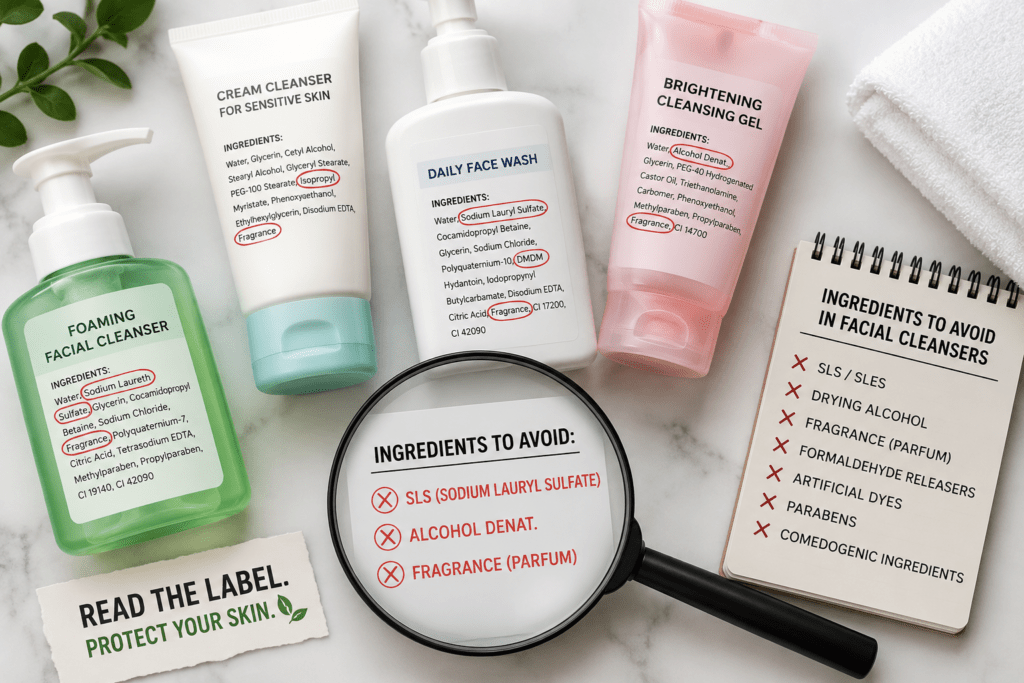
Sodium Lauryl Sulfate (SLS) and Sodium Laureth Sulfate (SLES) are commonly used as cleansing surfactants in foaming facial cleansers and other personal care products. They are popular because they create a rich, satisfying lather that feels like it is cleaning deeply. In reality, this intense cleaning action is often too much for the delicate skin on your face.
SLS is a potent surfactant that can strip natural oils, leading to dryness, tightness, and even flaking. It can also disrupt your skin’s pH balance, making it more prone to irritation. SLES is chemically similar but is processed to be slightly milder than SLS. Even so, it remains a common irritant for people with sensitive or reactive skin. Constant use of these harsh agents can weaken the skin barrier over time, leading to increased redness and sensitivity.
Alcohol-Based Cleansers
Skincare brands sometimes include alcohol to make a cleanser feel lightweight or to help it evaporate quickly. Common offenders include denatured alcohol, isopropyl alcohol, and ethanol. These ingredients can act as preservatives or solvents, but they come at a cost.
Alcohol is highly dehydrating. When you apply them to your face, they evaporate rapidly, taking moisture from the skin’s surface with them. This rapid drying can trick your skin into producing more oil to compensate for the loss of hydration. This leads to a cycle of dryness and excess oil, which often results in breakouts. If you notice a stinging or burning sensation after cleansing, your product may contain high levels of drying alcohol.
Fragrance and Dyes: Unnecessary Irritants
Adding fragrance and color to a facial cleanser serves no functional purpose for your skin. These ingredients are added strictly for the sensory experience—to make the product smell pleasant or look attractive in the bottle. Unfortunately, they are also among the most common causes of contact dermatitis and allergic reactions.
Synthetic Fragrances (Parfum)
When you see the word “fragrance” or “parfum” on an ingredient label, it does not refer to a single ingredient. Instead, it can represent a proprietary blend of numerous fragrance chemicals and natural scent ingredients, many of which are not individually disclosed on the label.
For people with sensitive skin, this can cause immediate reactions like redness, itching, and swelling. Even if you do not notice an immediate reaction, long-term exposure to synthetic fragrances can cause cumulative irritation. This irritation can make your skin more susceptible to breakouts and other skin concerns. Opting for fragrance-free formulas is a simple way to minimize this risk.
Artificial Dyes
Artificial dyes are strictly cosmetic additives. You can often identify them by names like Red 40, Blue 1, or Yellow 5. These chemicals are added to make a cleanser look vibrant, but they offer zero benefits to your skin’s health.
Like fragrances, these dyes are unnecessary potential irritants. They have been linked to skin sensitivity and allergic reactions in many users. There is no reason to risk a skin reaction for the sake of a colored gel or cream. If you want to play it safely, stick to products that avoid artificial dyes entirely.
Pore-Clogging Culprits: Ingredients That Lead to Breakouts
Some ingredients, while meant to be moisturizing or to provide texture, can cause trouble for acne-prone skin. These are often referred to as comedogenic, meaning they have a high potential to clog your pores.
Mineral Oil and Petrolatum
Mineral oil and petrolatum are occlusives. They work by forming a film over the skin to trap moisture inside. While this is helpful for dry skin on the body, it can be problematic for the skin on your face.
For many people, especially those with oily or acne-prone skin, these petroleum-derived ingredients can block the pores. When pores are blocked, they trap oil and bacteria, leading to whiteheads, blackheads, and inflamed pimples. While the comedogenic potential of these ingredients can vary based on how they are refined and combined with other ingredients, those prone to breakouts should approach them with caution.
Certain Fatty Acids and Alcohols
Not all fatty acids and alcohol are harmful, but some specific ones can trigger issues. Ingredients like isopropyl myristate, decyl oleate, and certain types of lauryl alcohol are known to be potentially comedogenic.
These ingredients are often added to improve the feel of a cleanser, making it creamy or smooth. If you are struggling with recurring breakouts despite using a basic skincare routine, check out your cleanser for these specific names. Switching to a formula that avoids these ingredients can sometimes be enough to clear up persistent, unexplained blemishes.
Preservatives to Be Wary Of: Protecting Your Skin from Over-Preservation
Preservatives are necessary in skincare to stop the growth of bacteria, mold, and yeast. Without them, your products would spoil quickly. However, the type of preservative used matters immensely.
Parabens (Methylparaben, Propylparaben, etc.)
Parabens are a group of preservatives used to prevent the growth of bacteria, mold, and yeast in cosmetic products. They have been widely used in skincare and cosmetics for decades but have received increased public and scientific attention regarding their safety in recent years. Many consumers and experts have raised concerns about their potential as endocrine disruptors, meaning they could interfere with hormones in the body. While the debate continues regarding their safety in low concentrations, many people prefer to avoid them entirely to be safe.
Formaldehyde-Releasing Preservatives
Some preservatives, including DMDM hydantoin, imidazolidinyl urea, and quaternium-15, work by slowly releasing small amounts of formaldehyde to prevent the growth of bacteria and fungi. Because formaldehyde is a well-recognized skin sensitizer and allergen, these preservatives may trigger irritation or allergic contact dermatitis in susceptible individuals.
Even though the amounts released are small, frequent exposure can cause chronic irritation, especially in people with sensitive skin. Using products that contain these formaldehyde-releasers means you are exposing your skin to a known sensitizer every single day. Many brands are moving away from these ingredients in favor of newer, safer preservation systems.
Choosing Wisely: A Path to Healthier Skin
Selecting the right facial cleanser is one of the most important steps in your daily routine. By avoiding harsh surfactants, unnecessary fragrances, comedogenic ingredients, and problematic preservatives, you give your skin the best chance to remain healthy.
Start by looking at the ingredient list before you purchase. If you see ingredients that raise red flags, it is often better to skip the product. Look for labels that say “fragrance-free,” but remember to double-check the ingredient list, as some products claiming to be “unscented” may still contain fragrance to mask the scent of other ingredients.
The best approach is often the simplest one. A gentle cleanser that effectively removes impurities without leaving your skin feeling tight or dry is all you need. Know your own skin type and understand how your skin reacts to different formulas. Your skin will be more resilient and healthier when you focus on gentle, effective ingredients that support your natural skin barrier.
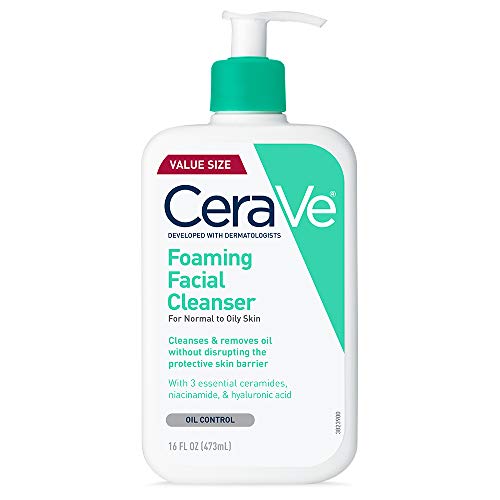
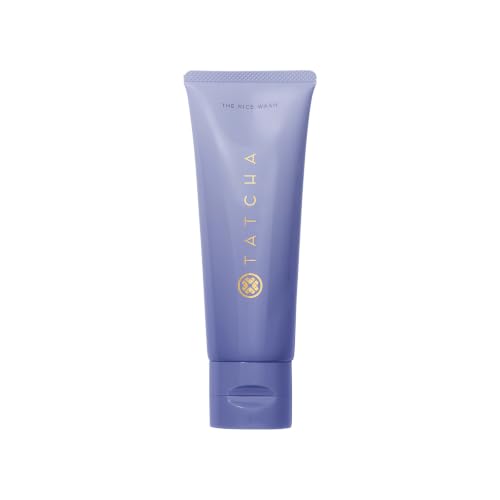
Recommended Products for Mild Facial Cleansers
Disclosure: As an Amazon Associate, I earn from qualifying purchases. We only recommend products that we believe offer value to our readers. Learn more.


Frequently Asked Questions (FAQs)
References
- American Academy of Dermatology Association. (n.d.). Face washing 101. https://www.aad.org/public/everyday-care/skin-care-basics/care/face-washing-101
- American Academy of Dermatology Association. (n.d.). Fragrance-free skin care products. https://www.aad.org/public/everyday-care/skin-care-secrets/routine/fragrance-free-skin-care
- American Contact Dermatitis Society. (n.d.). Formaldehyde and formaldehyde-releasing preservatives. https://www.contactderm.org/resources/allergens/formaldehyde
- Cosmetic Ingredient Review. (2019). Safety assessment of alkyl sulfates as used in cosmetics. https://www.cir-safety.org/ingredients
- Cosmetic Ingredient Review. (2019). Safety assessment of parabens as used in cosmetics. https://www.cir-safety.org/ingredients
- National Center for Biotechnology Information. (2022). Parabens as preservatives in cosmetics: Current regulatory status, exposure, and human health risk. https://www.ncbi.nlm.nih.gov/pmc/articles/PMC8834979/
- National Center for Biotechnology Information. (2024). Formaldehyde-releasing preservatives: Relationship to formaldehyde contact allergy. https://www.ncbi.nlm.nih.gov/pmc/articles/PMC11440018/
- National Library of Medicine. (2023). Sodium Lauryl Sulfate. In StatPearls. https://www.ncbi.nlm.nih.gov/books/NBK526107/
- U.S. Food and Drug Administration. (n.d.). Fragrances in cosmetics. https://www.fda.gov/cosmetics/cosmetic-ingredients/fragrances-cosmetics
- U.S. Food and Drug Administration. (n.d.). Parabens in cosmetics. https://www.fda.gov/cosmetics/cosmetic-ingredients/parabens-cosmetics